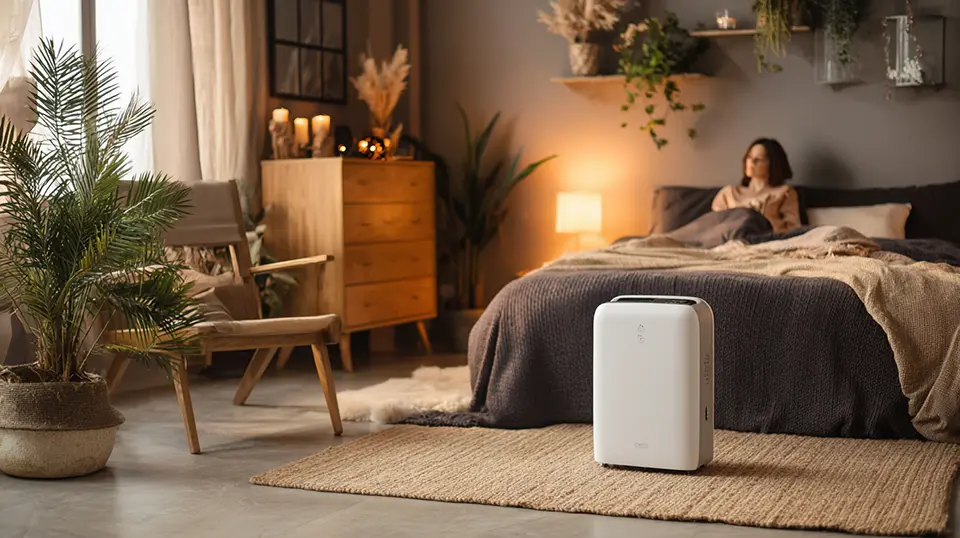
According to WOMAN&HOME
As concerns about damp and mould rise in homes worldwide, dehumidifiers are increasingly marketed as a simple solution. A recent expert-led report examines whether dehumidifiers genuinely help prevent mould, how they should be used, and where their limitations lie. The findings suggest that while dehumidifiers can play an important supporting role, they are not a standalone cure for mould-related problems.

Source: Wikimedia Commons, CC BY-SA 3.0
Why Mould Develops Indoors
Mould growth is primarily driven by excess moisture. Everyday activities such as cooking, showering, drying clothes indoors, and even breathing release water vapour into the air. In modern homes—often tightly sealed for energy efficiency—this moisture can accumulate if ventilation is insufficient.
When humid air meets cooler surfaces like walls, windows, or ceilings, condensation forms. Persistent condensation creates ideal conditions for mould spores, which are naturally present in indoor environments, to germinate and spread. Once established, mould can damage surfaces and pose health risks, particularly for people with respiratory conditions.

Source: Wikimedia Commons, CC BY-SA 3.0
The Role of Dehumidifiers
Dehumidifiers work by extracting moisture from the air, lowering relative humidity levels inside a room or home. Experts generally agree that maintaining indoor humidity between 40% and 60% reduces the likelihood of mould growth.
By removing excess moisture, dehumidifiers can:
Reduce condensation on windows and walls
Slow or prevent mould development
Improve indoor comfort and air quality
However, specialists caution that dehumidifiers address symptoms rather than root causes. They manage moisture levels but do not fix structural defects, poor insulation, leaks, or inadequate ventilation systems.
Where Dehumidifiers Are Most Effective
Experts note that dehumidifiers tend to be most effective in specific scenarios:
Small or enclosed spaces, such as bedrooms, bathrooms without windows, basements, or laundry rooms
Short-term moisture spikes, for example during colder months or while drying clothes indoors
Homes with adequate insulation, where moisture is the primary issue rather than water ingress
In these situations, dehumidifiers can significantly reduce airborne moisture and help prevent condensation from forming.

Source: Wikimedia Commons, CC BY-SA 3.0
Limitations and Common Misconceptions
A key misconception is that dehumidifiers can eliminate existing mould. Experts stress that this is not the case. Once mould is present, it must be physically removed or treated using appropriate cleaning or remediation methods. A dehumidifier may prevent further spread, but it will not kill mould embedded in surfaces.
Another limitation concerns penetrating damp or leaks. If moisture enters a building through damaged roofs, walls, or plumbing, a dehumidifier may run continuously without resolving the underlying issue. In such cases, professional repairs are essential.
Additionally, placing a dehumidifier in the wrong location or using an undersized unit can limit effectiveness. Large or open-plan spaces often require higher-capacity devices or multiple units to achieve meaningful humidity reduction.
Health Considerations
From a health perspective, experts emphasize that mould exposure can exacerbate asthma, allergies, and other respiratory conditions. Lowering humidity reduces spore proliferation, which may ease symptoms for sensitive individuals.
However, dehumidifiers must be maintained properly. Water tanks should be emptied regularly, and filters cleaned according to manufacturer guidance. Poorly maintained units can themselves become sources of microbial growth, undermining their intended benefit.
Dehumidifiers Versus Ventilation
The report highlights an important distinction between dehumidification and ventilation. Ventilation replaces stale, humid indoor air with fresh outdoor air, while dehumidifiers recirculate indoor air and remove moisture from it.
Experts generally recommend using dehumidifiers alongside good ventilation, not instead of it. Opening windows briefly, using extractor fans in kitchens and bathrooms, and ensuring air pathways throughout the home remain clear all contribute to moisture control.
In well-insulated homes, controlled ventilation combined with dehumidification offers the most balanced approach to preventing mould.
Energy Use and Cost Efficiency
Another consideration is energy consumption. Dehumidifiers require electricity to operate, and running them continuously can increase household energy costs. However, experts note that when used strategically—targeting problem areas and operating during peak humidity periods—dehumidifiers can be relatively cost-effective compared to repeated mould repairs.
Some homeowners also find that reduced humidity allows homes to feel warmer at lower thermostat settings, potentially offsetting energy use during colder seasons.
Expert Guidance on Best Practice
Based on expert advice, effective use of dehumidifiers includes:
Monitoring indoor humidity with a hygrometer
Choosing a unit sized appropriately for the room or area
Using dehumidifiers as a preventive measure rather than a cure
Combining dehumidification with ventilation and timely repairs
Experts stress that dehumidifiers are best viewed as one tool within a broader moisture-management strategy.
When Professional Help Is Needed
If mould persists despite controlled humidity, this may indicate deeper structural problems or widespread contamination. In such cases, professional assessment is recommended. Specialists can identify hidden moisture sources and determine whether mould remediation or building repairs are required.
Ignoring persistent mould can lead to escalating damage and increased health risks, making early intervention critical.
Conclusion
The expert consensus is clear: dehumidifiers can help with mould prevention, but they are not a universal solution. They are most effective when used correctly, in suitable environments, and alongside proper ventilation and building maintenance.
For homeowners dealing with mild condensation and humidity issues, dehumidifiers can be a valuable preventive tool. For more serious damp and mould problems, however, addressing underlying causes remains essential. Understanding the role—and limits—of dehumidifiers empowers homeowners to make informed decisions and maintain healthier indoor environments.
References
Centers for Disease Control and Prevention (CDC). Mold.
According to WOMAN&HOME