According to THE WILDLIFE SOCIETY
A Silent Threat Behind Global Amphibian Decline
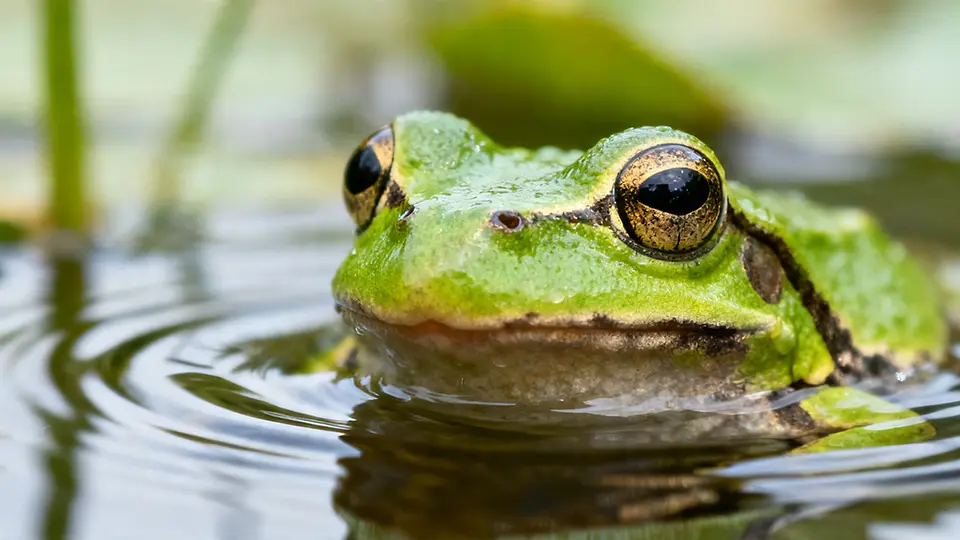
A deadly fungal pathogen responsible for widespread amphibian declines worldwide has been traced back to Brazil, offering new insight into one of the most significant biodiversity crises in recent history. According to a report by The Wildlife Society, scientists have identified South America—specifically Brazil—as a key origin point of the pathogen that has devastated frog populations across multiple continents.
The fungus, known for causing chytridiomycosis, has been linked to mass die-offs and extinctions among amphibian species. For decades, researchers have attempted to understand where this pathogen emerged and how it spread so extensively. This new finding marks a critical step in reconstructing its global trajectory.

Understanding Chytridiomycosis and Its Impact
Chytridiomycosis is a disease that affects amphibians by targeting their skin, an organ essential for respiration and hydration. The pathogen disrupts these functions, often leading to fatal physiological imbalances. Unlike many other wildlife diseases, chytridiomycosis can spread rapidly through populations, particularly in moist environments where amphibians thrive.
The disease has been associated with dramatic declines in frog populations worldwide, making it one of the most destructive wildlife diseases ever recorded. Entire species have disappeared, while others have experienced severe population reductions.

Brazil Identified as a Genetic Origin Point
Recent genetic analyses have allowed scientists to trace the lineage of the fungus more precisely. By examining different strains, researchers found evidence suggesting that Brazil harbors a diverse range of genetic variants, indicating a long evolutionary presence in the region.
This diversity suggests that the fungus may have originated in Brazil before spreading to other parts of the world. Over time, global trade, human movement, and environmental changes may have facilitated its expansion beyond its original habitat.
Global Spread and Human Influence
The international spread of the pathogen is closely linked to human activity. The movement of amphibians for trade, research, and the pet industry has created pathways for the fungus to travel across continents. Once introduced into new environments, it can rapidly infect local populations that have no natural resistance.
In ecosystems where amphibians play crucial roles—such as controlling insect populations and maintaining ecological balance—the loss of these species can have cascading effects. The spread of the fungus, therefore, represents not only a biological issue but also an ecological one.
Ecological Consequences Beyond Amphibians
Amphibians are often considered indicator species, meaning their health reflects the overall condition of their environment. The decline of frog populations due to fungal infection signals broader ecological instability.
As amphibians disappear, the effects ripple through food webs. Insect populations may increase, while predators that rely on amphibians for food may decline. These changes can alter entire ecosystems, demonstrating how a microscopic organism can influence large-scale environmental dynamics.
Scientific Challenges and Ongoing Research
Despite significant advances, many questions remain about the fungus and its behavior. Researchers continue to investigate how environmental factors such as temperature, humidity, and habitat disruption influence the spread and severity of the disease.
Efforts are also underway to develop mitigation strategies, including captive breeding programs, habitat management, and potential treatments. However, controlling a pathogen that exists across diverse ecosystems presents substantial challenges.
A Broader Lesson in Biodiversity and Disease
The discovery of Brazil as a likely origin point underscores the importance of understanding disease ecology in a globalized world. It highlights how local biological phenomena can become global crises when combined with human activity and environmental change.
This case also emphasizes the need for stronger biosecurity measures and monitoring systems to prevent similar outbreaks in the future. As ecosystems become increasingly interconnected, the risk of pathogen spread grows accordingly.

Looking Ahead
The identification of the fungus’s origins provides a clearer picture of its history, but it also reinforces the urgency of addressing its impact. Protecting amphibian populations will require coordinated international efforts, combining scientific research, conservation strategies, and public awareness.
In the dense ecosystems of Brazil, where this pathogen may have quietly existed for centuries, a deeper understanding is now emerging. It is a reminder that even the smallest organisms can shape the fate of entire species—and that the balance of nature often depends on forces too small to see.
References
Scheele, B. C. et al. (2019). Amphibian fungal panzootic causes catastrophic biodiversity loss.
According to THE WILDLIFE SOCIETY