According to MONEY CONTROL
I. A Global Health Crisis Demands Novel Solutions
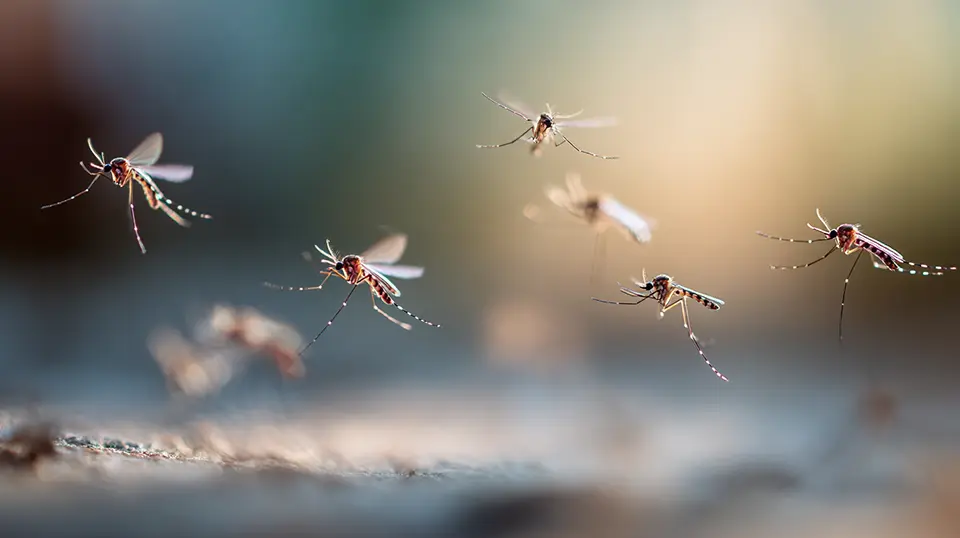
Vector-borne diseases—particularly malaria, dengue, and Zika—continue to claim millions of lives and impose massive economic burdens globally.
Conventional methods of control, such as insecticides, are increasingly challenged by mosquito resistance and environmental concerns. Against this backdrop, scientists have engineered a groundbreaking biological solution: a harmless, sweet-scented fungus designed to exploit the very sensory mechanisms mosquitoes use to find hosts.
This major breakthrough, detailed in recent research published in Nature Communications, merges synthetic biology and entomology to create a targeted, self-sustaining defense mechanism. The innovation has the potential to dramatically reduce disease transmission rates and offers a vital, eco-friendly alternative to chemical pesticides.

Location: Lisbon region, Portugal
Source: Wikimedia Commons, CC BY-SA 3.0
II. The Ingenuity of the Fungal Lure
The core of this innovation lies in the genetically engineered fungus, Metarhizium pingshaense. This species is naturally pathogenic to mosquitoes, meaning it can infect and kill them. However, the true novelty is its modification to become an irresistibly attractive lure.
A. Exploiting Olfactory Attraction
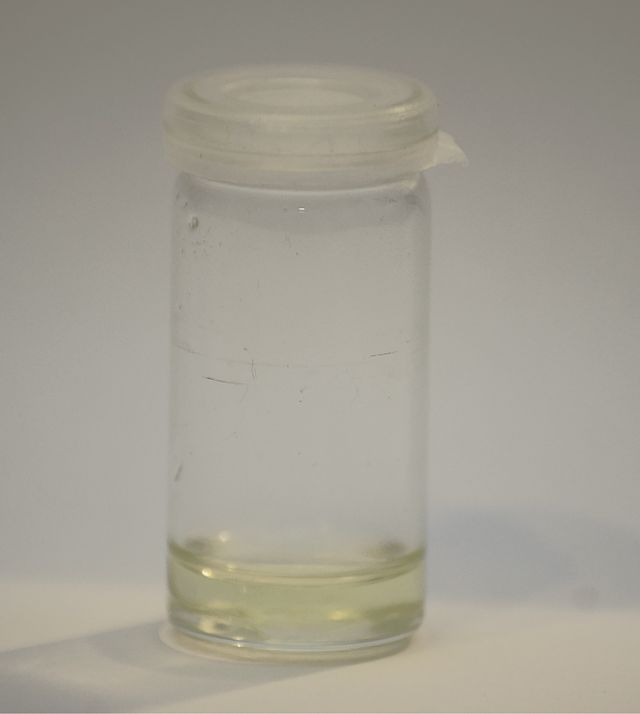
Mosquitoes, particularly females seeking a blood meal, rely heavily on scent cues to locate human hosts. One of the primary attractants is the volatile organic compound limonene — a fragrant chemical found in citrus fruits and widely used in perfumes and repellents.
Researchers successfully introduced genes responsible for limonene biosynthesis into the M. pingshaense fungus.
The Fungal Deception: The modified fungus emits a powerful, sweet scent, effectively hijacking the mosquito’s sensory system and fooling it into landing on the fungus instead of a human.
Source: Wikimedia Commons, CC BY-SA 4.0
B. The Dual Mechanism of Action
Once the unsuspecting mosquito lands on the fungal spore, the fungus acts as a biopesticide, initiating a fatal infection:
- Attraction: The emitted limonene scent draws mosquitoes toward the spores.
- Infection: Upon contact, the spores germinate, penetrate the cuticle, and proliferate internally, killing the mosquito.
The combined effect is a targeted “lure-and-kill” system, far less ecologically disruptive than broad-spectrum insecticides.
III. Advantages Over Conventional Mosquito Control
This bioengineered fungus presents numerous advantages that could position it as a cornerstone of future public health strategies.
| Feature | Bioengineered M. pingshaense Fungus | Conventional Insecticides |
|---|---|---|
| Mechanism | Infects mosquitoes biologically, not chemically | Kills via neurotoxic compounds |
| Resistance Risk | Extremely low — infection mechanisms are complex | High — widespread resistance in Anopheles and Aedes species |
| Target Specificity | Mosquito-selective | Affects bees, butterflies, aquatic larvae |
| Environmental Impact | Fully biodegradable; leaves no residues | Persistent toxins, soil and water contamination |
| Deployment | Self-sustaining, long-lasting | Requires frequent spraying |
By reducing populations of female mosquitoes (the primary disease transmitters), the spread of Plasmodium parasites and arboviruses is significantly curtailed—saving millions of lives, especially in endemic regions.

Source: Wikimedia Commons, CC BY-SA 4.0
IV. Real-World Applications and Global Health Potential
The successful engineering of this lure-and-kill fungus marks a pivotal moment for vector control. Researchers envision several scalable applications:
- Indoor Residual Treatment (IRT): Sprays or coatings on walls draw mosquitoes away from humans.
- Outdoor Traps and Stations: Fungus-baited traps create kill zones in communities.
- Low-Cost Deployment: Easily cultured for resource-limited regions.
This approach shifts disease control from defensive barriers (nets, repellents) and chemical warfare (insecticides) to a biological counterstrategy that uses the mosquito’s own senses against it.

Source: Wikimedia Commons, CC BY-SA 4.0
V. Future Trajectory and Ethical Considerations
While the initial results are highly promising, the next steps include large-scale field trials, biosafety evaluations, and regulatory approval in accordance with WHO’s guidance on genetically modified vector control.
As with all GMOs, rigorous testing and transparent communication are crucial to ensure environmental safety and to avoid impacts on non-target organisms.
Ultimately, this sweet-scented fungus represents a realistic hope for eradicating or drastically reducing malaria and other vector-borne diseases — a renaissance in bioengineered vector control science.
References
- WHO (2024). Vector-borne Diseases Fact Sheet.
- CDC (2024). Biology and Lifecycle of Malaria Parasite.
- FAO (2023). Biocontrol Agents in Agriculture and Vector Management.
According to MONEY CONTROL