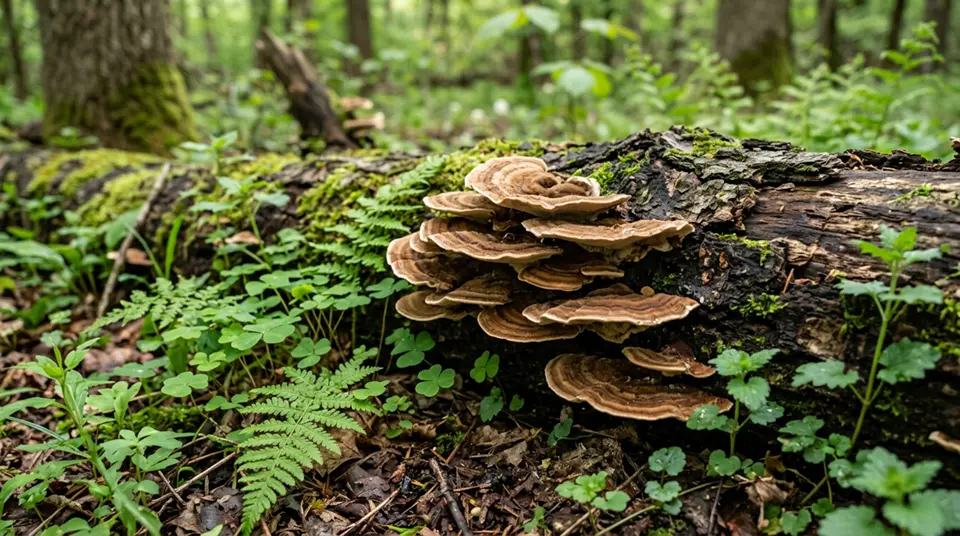
According to canadiangeographic
A Fungus Found Across Vast Distances
A recent report featured by Canadian Geographic explores how scientists identified the same fungal species in locations separated by an ocean and nearly 40 years in time. The discovery has drawn attention within the scientific community because it highlights the remarkable ability of fungi to disperse, survive, and persist across enormous geographic and temporal scales.
Researchers say the finding illustrates how fungal life is often far more connected and widespread than previously understood.

Understanding the Discovery
The report describes how mycologists identified fungal samples collected decades apart and from distant environments, only to determine through modern analysis that they belonged to the same species.
Advances in DNA sequencing and molecular identification allowed scientists to compare genetic material more precisely than was possible in earlier decades. This technological progress has transformed fungal taxonomy and revealed hidden relationships between specimens collected in different parts of the world.
What once appeared to be unrelated discoveries were ultimately linked through genetic evidence.
How Fungi Travel Across the Planet
One of the central questions raised by the study is how fungal organisms manage to spread across such vast distances. Scientists believe airborne spores play a major role.
Fungal spores are microscopic reproductive structures capable of traveling through atmospheric currents over long distances. Wind systems, storms, oceanic airflows, migratory animals, and human activity may all contribute to fungal dispersal.
Some spores are highly resistant to environmental stress, allowing them to survive ultraviolet radiation, temperature extremes, and dehydration during long journeys.

Fungi and Global Connectivity
The discovery reinforces the idea that fungal ecosystems are globally interconnected. Although fungi often remain hidden underground or within organic material, their spores continuously move through the atmosphere and across ecosystems.
Researchers increasingly recognize that fungal species may occupy much broader ranges than previously documented. In some cases, species believed to be regionally isolated may actually exist across continents.
This global distribution challenges earlier assumptions about fungal geography and biodiversity.
The Role of Modern Genetic Technology
DNA analysis played a critical role in confirming the connection between the fungal samples. Traditional fungal identification relied heavily on physical appearance, spore shape, and growth characteristics.
However, many fungal species exhibit highly similar visual features despite genetic differences. Molecular sequencing now allows researchers to distinguish species with far greater accuracy.
This shift toward genetic identification is reshaping scientific understanding of fungal diversity and evolutionary relationships.
Fungi as Long-Term Survivors
Another important aspect of the report is fungal longevity. Some fungal organisms can persist in dormant or low-activity states for extended periods before environmental conditions trigger renewed growth.
Spores may remain viable for years or even decades under suitable conditions. This biological resilience helps explain how certain fungal species can survive across long timescales and diverse environments.
The study highlights fungi as among the most adaptable organisms on Earth.
Ecological Importance of Widespread Fungi
Fungi play essential ecological roles regardless of where they are found. They decompose organic matter, recycle nutrients, form symbiotic relationships with plants, and influence soil health.
The ability of fungi to disperse widely may help maintain ecosystem stability and biodiversity across regions. Some species contribute to forest resilience, while others influence carbon cycling and nutrient exchange.
Understanding fungal distribution therefore has implications beyond taxonomy, extending into ecology and environmental science.

Climate and Environmental Influence
Environmental conditions strongly influence fungal dispersal and survival. Humidity, temperature, wind patterns, and ecosystem disturbance can all affect how spores move and establish new populations.
Climate change may alter these patterns further by shifting atmospheric circulation and changing habitats suitable for fungal growth.
Scientists are increasingly studying how global environmental changes influence fungal movement and biodiversity.
Hidden Biodiversity Still Being Discovered
The report also highlights how much remains unknown about fungal life. Millions of fungal species are estimated to exist worldwide, yet only a fraction have been formally described by science.
Improved genetic tools are accelerating discoveries and revealing connections between organisms previously thought unrelated.
This hidden biodiversity represents one of the least explored areas of life on Earth.
Fungi and Scientific Curiosity
For mycologists, discoveries like this demonstrate how fungi challenge traditional biological assumptions. Unlike many plants and animals, fungi operate through microscopic networks and dispersal systems that often transcend visible ecological boundaries.
Their ability to remain hidden while maintaining global presence makes them uniquely difficult—and fascinating—to study.
A Reminder of Nature’s Invisible Networks
The finding ultimately illustrates how interconnected natural systems can be. A fungal species discovered decades apart and separated by an ocean reflects the hidden biological networks operating continuously across the planet.
Though largely invisible, fungi connect ecosystems through spores, soil, air currents, and ecological interactions in ways scientists are only beginning to fully understand.
Looking Ahead
As fungal research advances, discoveries like this may become increasingly common. Improved sequencing technologies and international collaboration are revealing patterns of fungal distribution that challenge older ecological models.
The report suggests that fungi are not isolated local organisms but highly mobile participants in global ecosystems. Understanding their movement and persistence may become increasingly important in fields ranging from biodiversity conservation to climate science and agriculture.
References
According to canadiangeographic
